1. These chapters contain some of the highest and lowest points in Israelite history. What do you consider the three most uplifting and inspiring things from this week’s reading?
2. What do you consider the three saddest episodes in this week’s reading?
3. What other principles or lessons in these chapters are worth noting?
4.Why does the Bible devote so much space to explaining why Israel fell?
5. What lesson might we learn from the rediscovery of the Book of the Law in the days of Josiah?
6. Why does the book end with a small note of hope about Jehoiachin?
Possible Answers to Points to Ponder in 2 Kings 16-25
1. These chapters contain some of the highest and lowest points in Israelite history. What do you consider the three most uplifting and inspiring things from this week’s reading?
For me, they would be:
Hezekiah’s righteousness, which allowed the Lord to perform miracles on his behalf, such as:
Sending an angel to kill 185,000 Assyrian soldiers in one night. (19:35) That same God and angels are still on duty! We needn’t fear powerful and wicked nations, but we do need to fear offending the power which could protect us from them.
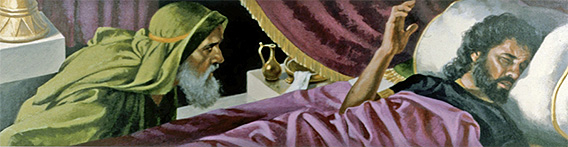
Blessing him with an additional 15 years of life beyond the time originally decreed for his death. (20:1, 5-6)
Turning the shadow on the sundial backward ten degrees (20:11)
Josiah’s righteous reign, beginning at age 8! (22:1-2)
The discovery of the “book of the law” during Josiah’s reign (22:11), and his efforts to read the book in the ears of all the people, and the people’s making a covenant to live accordingly. (23:3)
2. What do you consider the three saddest episodes in this week’s reading?
For me they would be:
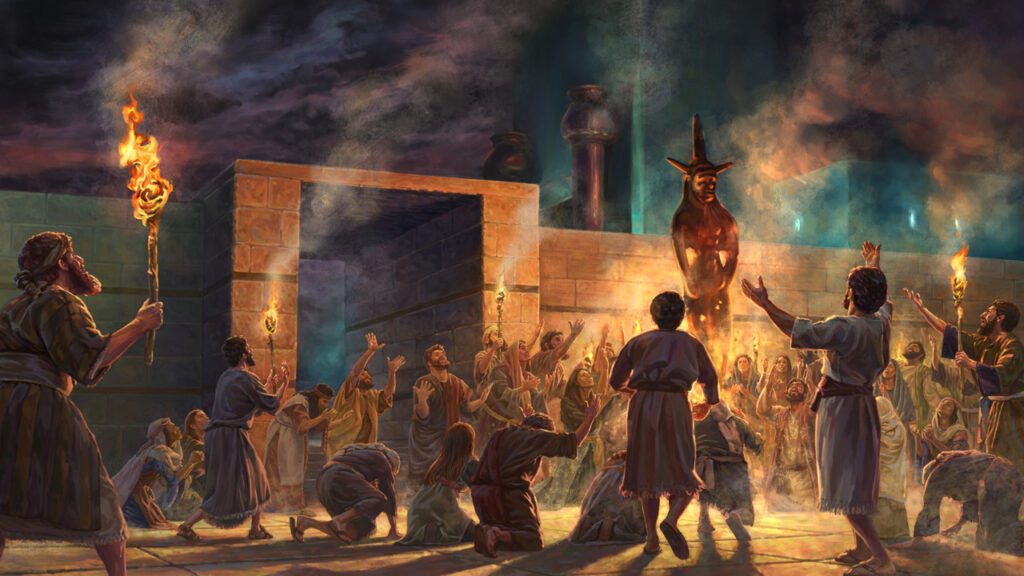
The wickedness of Israel and Judah and of their kings, which brought down the judgments of God upon them, despite their temporary repentance during the reign of Josiah. (17:7-12, 14—17; 18:11-12)
The captivity of the kingdom of Israel at the hands of the Assyrians. (17:6, 18)
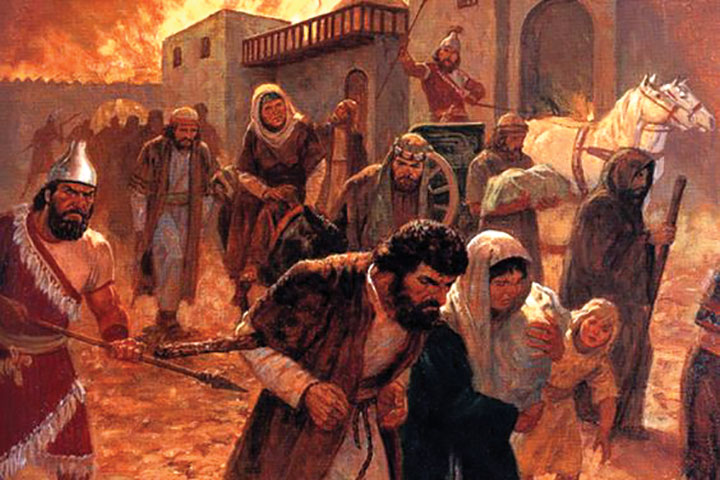
The destruction and captivity of the kingdom of Judah at the hands of the Babylonians. (25:4-11)
3. What other principles or lessons in these chapters are worth noting??
God was patient in sending prophets to warn His people of what would befall them if they didn’t repent. (17:13)
Despite his righteousness in general, Hezekiah may have been a bit too willing to placate the king of Assyria by cutting off the gold from the temple rather than relying on the Lord. (18:16.) And he may have been unwise in 20:13 to show the son of the king of Babylon all the royal treasures.
The record speaks of lions being sent among the Samaritans, which slew some of them. (17:25.) One of the traditional arguments against the Book of Mormon has been that it mentions horses among the Nephites, though researchers claim there have not been horse bones found in the Americas dating to Nephite times. Yet lion bones have not been found in Israel either. If no one questions the accuracy of 2 Kings 17:25, they should apply the same standard to the Book of Mormon. Absence of evidence does not constitute evidence of absence!
The “remnant” spoken of in 19:31, which should escape from Jerusalem, would one day return, in the Lord’s due time, in the form of latter-day descendants.
It is possible to read 2 Kings 19:35 with a bit of humor: “When they arose early in the morning, behold, they were all dead corpses.” Presumably, the author meant that when the Israelites arose in the morning, the Assyrians were all dead, but a careless reading could make it sound like the Assyrians themselves were astonished to get up and find they were dead! Joseph Smith corrected this passage to read “when they who were left arose.”
As good as Hezekiah was, one wonders why his son, Manasseh, was so wicked. It is not our place to judge. But it is worth asking whether we give sufficient attention to strengthening our families rather than focusing primarily on employment and Church callings. Of course, it is equally worth asking how a king as bad as Ahaz (2 Kings 16) could have a son as good as Hezekiah. In the end, we are each responsible for what we become, with God’s help, and cannot blame our parents for our failures nor take full credit for the success of our children.
That not every statement in the Bible can be taken strictly literally, since of both Hezekiah and Josiah it was said that “like unto him was there no king before him,… neither after him arose there any like him.” (18:5; 23:25.)
The destruction of Jerusalem during the reign of Zedekiah (25:4-11) was the same event of which Lehi and others of his contemporaries warned in the opening chapters of the Book of Mormon.
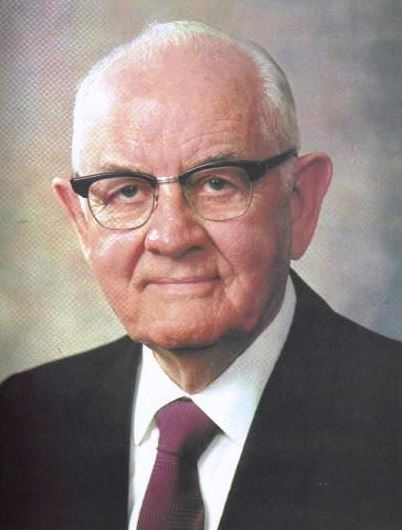
In 2 Kings 20, we learn that Hezekiah was appointed to die at a given time, but through his prayer, the Lord granted him an additional 15 years of life. This raises the question of whether there is a time set for each of us to die. President Spencer W. Kimball had this to say on the subject:
“I am confident that there is a time to die. I am not a fatalist. I believe that many people die before ‘their time’ because they are careless, abuse their bodies, take unnecessary chances, or expose themselves to hazards, accidents and sickness. …
“God controls our lives, guides and blesses us, but gives us our agency. We may live our lives in accordance with His plan for us or we may foolishly shorten or terminate them.
“I am positive in my mind that the Lord has planned our destiny. We can shorten our lives, but I think we cannot lengthen them very much. Sometime we’ll understand fully, and when we see back from the vantage point of the future, we shall be satisfied with many of the happenings of this life which seemed so difficult for us to comprehend.” (Tragedy or Destiny, pp. 9, 11.)
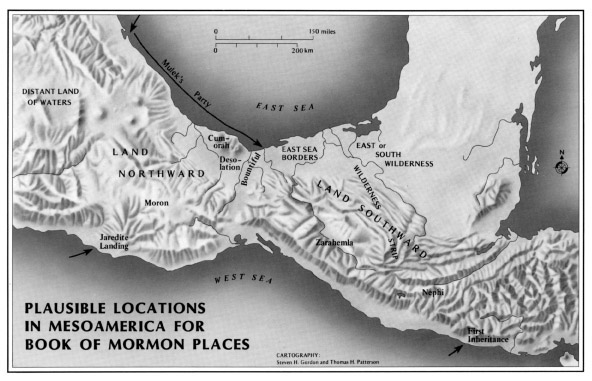
Latter-day Saints know something that the author of 2 Kings 25:7 didn’t. While most of the sons of Zedekiah were killed by the Babylonians, there was one, Mulek, who escaped and, presumably with divine as well as human help, made his way to the Americas. His descendants are known in the Book of Mormon as the people of Zarahemla, or colloquially as the Mulekites. They were discovered by Mosiah in the book of Omni and merged with the Nephites under Mosiah’s leadership. Thus, at least three tribes of Israel are represented by the Book of Mormon peoples. Lehi was of Manasseh, while we learn that Ishmael was of Ephraim. Mulek would have been of Judah. So, descendants of the Book of Mormon peoples could be designated by a patriarch as literally of any of those tribes, most likely being a mixture of all three. (And Lehi and Ishmael and perhaps even Mulek could well have had ancestry from more than one tribe, even though one of those lineages predominated.)
Judah’s experience without the scriptures parallels in significant respects the Mulekite experience. When Mosiah found the Mulekites, or people of Zarahemla, he found they had come with no records and knew nothing of their Creator or His gospel, and their language had become corrupted. We see here the importance of constant study of the scriptures for both spiritual and temporal reasons.
We find the word of the Lord being communicated in 22:14 by Huldah, a prophetess!
4. Why does the Bible devote so much space to explaining why Israel fell?
In 2 Kings 17, the author pauses the historical narrative and gives a long explanation of the causes of Israel’s destruction. The fall of Samaria was not presented as merely a political or military event. Instead, it was a spiritual one.
The text lists many reasons:
Idolatry
Rejecting the prophets
Following the practices of surrounding nations
Persistently refusing to repent
The author emphasizes that the Lord had warned Israel repeatedly through prophets, but the people refused to listen.
This reminds us that scripture writers were not merely recording history. They were interpreting history in light of covenant faithfulness. Their message is clear: nations and individuals rarely collapse suddenly; decline usually comes after long periods of ignoring repeated warnings.
5. What lesson might we learn from the rediscovery of the Book of the Law in the days of Josiah?
During the reign of King Josiah, the high priest Hilkiah discovered the Book of the Law in the temple (2 Kings 22). When the book was read to the king, he immediately tore his clothes in distress because he realized how far the nation had drifted from the commandments.
Several lessons stand out.
First, it appears that the scriptures had been neglected long enough to be lost within the temple itself. That alone says much about the spiritual condition of Judah.
Second, when the scriptures were rediscovered and read, they produced repentance and reform. Josiah removed idols, destroyed pagan shrines, and renewed the covenant.
This episode shows that when people seriously encounter the word of God—even after long neglect—it still has the power to awaken conscience and inspire reform.
6. Why does the book end with a small note of hope about Jehoiachin?
The book concludes with an interesting detail about King Jehoiachin, who had been taken captive to Babylon. After many years in prison, the Babylonian king released him, treated him kindly, and allowed him to dine regularly at the royal table (2 Kings 25:27–30).
At first glance, this may seem like an insignificant historical note. But it serves an important purpose.
Even though Jerusalem had fallen and the Davidic monarchy appeared finished, a descendant of David was still alive and honored in Babylon. The royal line had not been extinguished.
For ancient readers, this ending quietly suggested that the promises made to David had not completely failed. The story of God’s covenant with David’s house was not yet over.
Relevant Cartoons for Your Enjoyment
Lion Control Program (2 Kings 17:25-26)
2 Kings 17:33
"When they arose early in the morning, behold, they were all dead corpses." (2 Kings 19:35)
2 Kings 20:11
2 Kings 20:12-19
Manasseh's Trophy Case
Hezekiah's Tunnel. (2 Kings 20:20)
King Manasseh's Idol Collection Award (2 Kings 21)
To accompany your Come, Follow Me study for March 2-8 In addition to reading these chapters, you may want to look at: Old Testament Scripture Helps for Genesis 24-33 at: Genesis 24–33 Scripture Central Genesis 24-33 - Scripture Central FAIR Let God Prevail The Interpreter Foundation Genesis 24–33 The following videos: If you would like a Kahoot game related to these chapters, click here f or Genesis 24-27 : https://create.kahoot.it/share/genesis-24-27/8bb292fe-01c5-4102-b05e-8c695dde23f9 . For a similar Kahoot related to chapters 28-33, click here: https://create.kahoot.it/share/genesis-28-33/a9f695d4-8573-4120-a57d-047fd808279a . Points to Ponder in Genesis 24- 33 1. How many interesting parallels can you find between the life of Isaac and that of his father, Abraham? 2. What are the most important points to remember, in your opinion, from the story of the marriage of Isaa...
To accompany your Come, Follow Me study for April 27-May 3 In addition to reading the indicated chapters, you may wish to look at: Old Testament Study Helps at Exodus 35–40; Leviticus 1; 4; 16; 19 . Scripture Central Exodus 35-40; Leviticus 1, 4, 16, 19 - Scripture Central FAIR Holiness to the Lord The Interpreter Foundation Exodus 35–40; Leviticus 1; 4; 16; 19 The following videos: If you would like a Kahoot game related to this material, click here: https://create.kahoot.it/share/exodus-35-40-leviticus-1-16-19/0b8b87c2-6c42-4b8f-a865-ebd14f4ce2cd Points to Ponder in Exodus 35-40; Leviticus 1, 4, 16, 19 1. Of what possible value is all the detail in these chapters concerning the construction of the tabernacle? What underlying principles can you discover that apply to our temple worship today? 2. Why did Moses ask for donations only from the willing-hearted? (Exodus 35:5, 21-22, 29, 36:2, Wouldn’t it h...
To accompany your Come, Follow Me study for the week of May 11-17 I n addition to reading the indicated chapters, you may wish to look at: Old Testament Study Helps at Deuteronomy 6–8; 15; 18; 29–30; 34 . The remaining chapters of Deuteronomy, to find out what everyone else will be missing! Scripture Central Deuteronomy 6-8, 15, 18, 29-30, 34 - Scripture Central FAIR Beware Lest Thou Forget the Lord The Interpreter Foundation Deuteronomy 6–8; 15; 18; 29–30; 34 The following videos: If you would like a Kahoot game related to this material which you could use for personal study or use with your family or your class, click here: https://create.kahoot.it/share/deuteronomy-6-8-15-18-29-30-and-34/3d106b2a-c711-4e3e-8bc2-24edcc63a00b Points to Ponder in Deuteronomy 6-8, 15, 18, 29-30, and 34 1. Deuteronomy 6:4-9 is the first paragraph of what came to be known in Judaism as the “Shema,” a declaration which the faithful w...








Comments
Post a Comment