Points to Ponder in Exodus 19-20, 24, 31-34
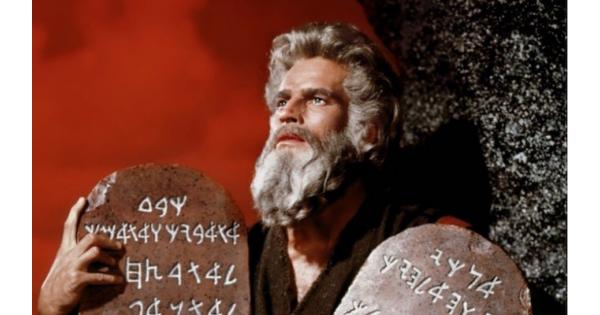
To accompany your Come, Follow Me study for April 20-26
In addition to reading these chapters, you may want to look at:
- Old Testament Study Helps at Exodus 19–20; 24; 31–34.
- Scripture Central Exodus 19-20, 24, 31-34 - Scripture Central
- FAIR All That the Lord Hath Spoken We Will Do
- The Interpreter Foundation Exodus 19–20; 24; 31–34
- The portion of the Old Testament Institute Student Manual relating to Exodus 18-19 at https://www.churchofjesuschrist.org/study/manual/old-testament-student-manual-genesis-2-samuel/exodus-11-19-the-passover-and-the-exodus?lang=eng
- The portion of the Old Testament Institute Student Manual relating to Exodus 20 at https://www.churchofjesuschrist.org/study/manual/old-testament-student-manual-genesis-2-samuel/exodus-20-the-ten-commandments?lang=eng
- The portion of the Old Testament Institute Student Manual relating to chapters 21-34 at https://www.churchofjesuschrist.org/study/manual/old-testament-student-manual-genesis-2-samuel/exodus-21-24-31-35-the-mosaic-law-a-preparatory-gospel?lang=eng
- The Joseph Smith Translation clarifications for these chapters at https://www.churchofjesuschrist.org/study/scriptures/jst/jst-ex?lang=eng
- See any or all of the following videos:
Points to Ponder in Exodus 19-20, 24, 31-34
1. How do Latter-day Saints most often misunderstand Exodus 19:5? What would be a better synonym for “peculiar” here than “weird”?

2. What six revelations or miracles can you find in chapters 19-20?

3. What application can we make of 19:10-14 as we prepare to attend the temple?

4. What opportunity do we learn in 19:6 that the Israelites missed out on as a nation? Where in modern scripture do we learn more about it?
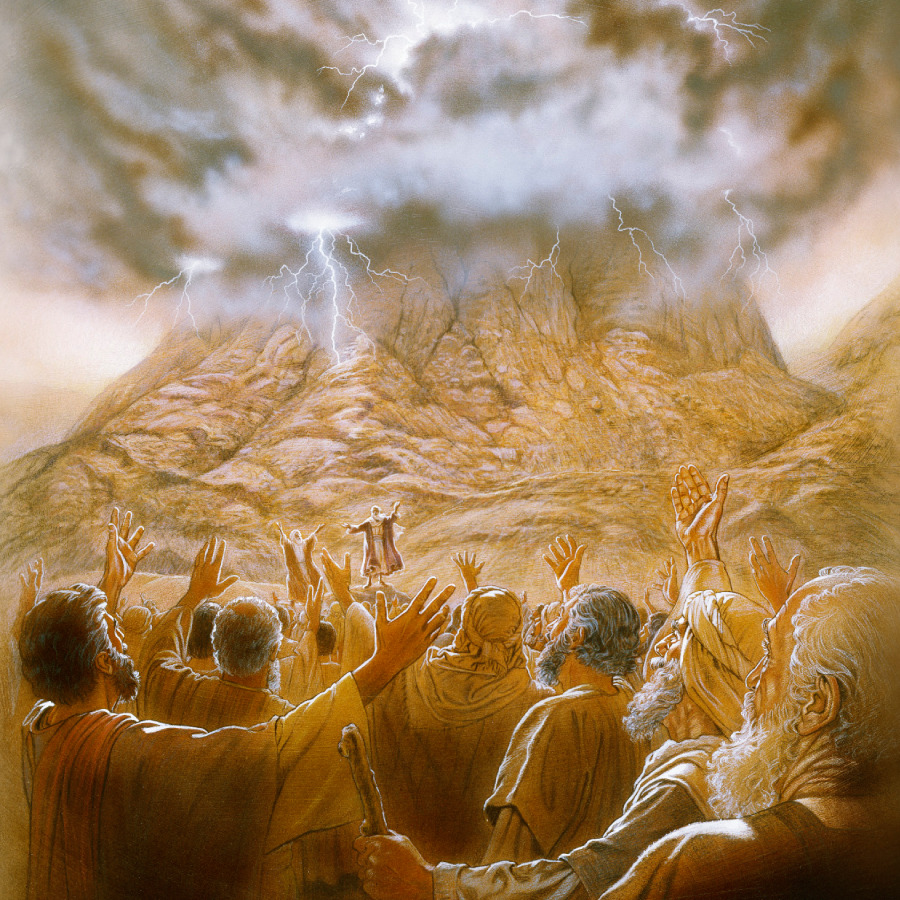
5. What is the most needed modern application of the first and second commandments, which forbade having any gods before our Father in Heaven or making graven images? Is idolatry really an issue in this intellectually advanced age?
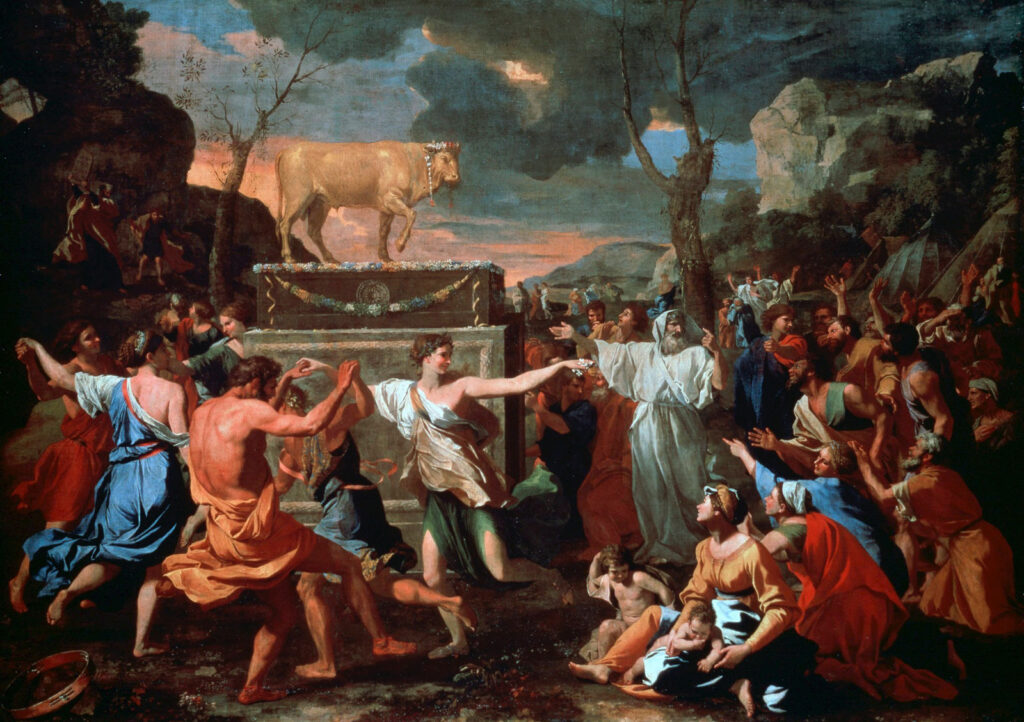
6. Does the commandment against making graven images mean we should not have statues of Jesus in our homes or pictures of Him on our walls or in our chapels?
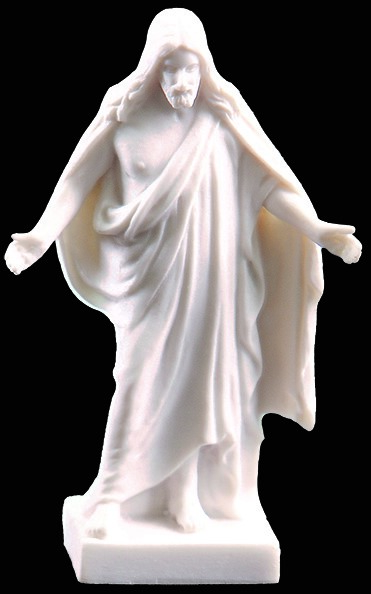
7. How many different applications can you think of for the third commandment, not to “take the name of the Lord … in vain”?
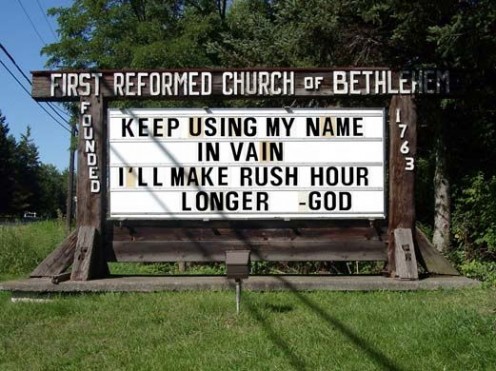
8. Which of the following would be clear violations of the fourth commandment, to keep the Sabbath Day holy?
- Going to a good documentary movie at a theater on Sunday.
- Checking in on the Super Bowl for five minutes to see how it was going.
- Accepting a request from a neighbor to take care of his dog over a weekend.
- Taking a walk in the park with your family.
- Going to the beach with your family after first attending your meetings.
- Buying gas on Sunday at a self-serve station.
- Inviting the neighbors over for a Sunday dinner and incurring extra work as a result.
- Cramming for a school test on Sunday.
- Skipping Sunday meetings altogether to visit a sick friend in the hospital.
- Sleeping all afternoon, since it is a “day of rest.”
- Taking the only job you could find to save up money for a mission but which required work on Sunday.
- Choosing voluntarily to become a dairy farmer, which would require milking the cows every Sunday.
- Going into the military, which would require Sunday work.
- Washing your white shirt or Sunday dress on Sunday morning if you had forgotten to do so earlier.
- Reading this far on this list without recognizing there is something wrong with the list itself.
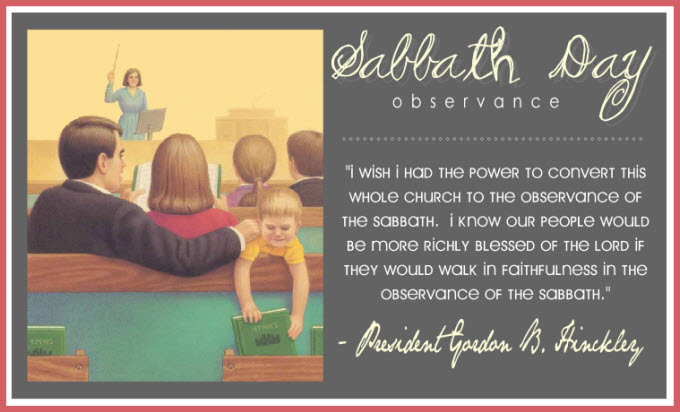
9. How does the commandment to honor one’s father and mother apply to one whose father is abusive and whose mother is an alcoholic?
10. The fifth commandment implies that if you honor your father and mother, “your days will be long.” How do we explain the early death of some who really loved their parents?
11. What footnotes may you want to put next to the sixth commandment, “Thou shalt not kill,” to make it as clear as possible what the Lord means here?

12. The seventh commandment specifies, “Thou shalt not commit adultery.” The dictionary defines that as “voluntary sexual intercourse between a married person and a person who is not his or her spouse.” Why is the Church, then, so opposed to premarital sex and homosexual relations between unmarried people?

13. What applications of the commandment “thou shalt not steal” could you suggest beyond the most obvious ones?

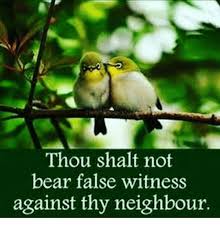
14. The ninth commandment says only that we shouldn’t bear false witness against someone else. It doesn’t say anything against lying otherwise, does it?
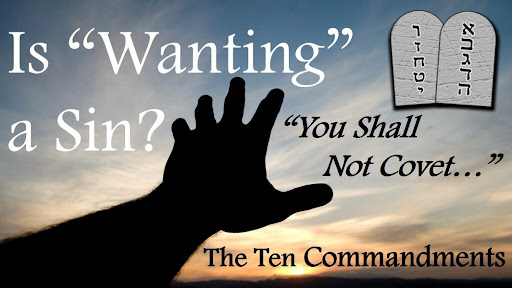
15. How guilty should we feel about having broken the tenth commandment, “thou shalt not covet,” if we wish I had a house or car as nice as our neighbor’s?
16. Which two or three of the Ten Commandments do you feel are most in need of additional emphasis among Latter-day Saints? Why?
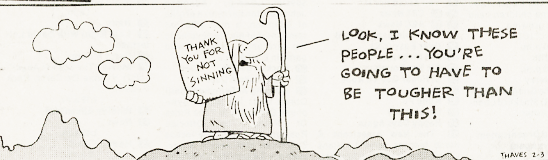
17. How do the first four of the Ten Commandments differ from the last six?
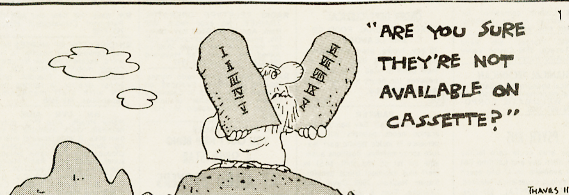
18. Why didn’t the Israelites want God to speak to them any more after they heard Him speak the Ten Commandments in the hearing of them all?
19. Are we really bound by the Ten Commandments today? Weren’t they part of the lesser law, or law of Moses, which Jesus replaced when He came?
20. What do we read in Exodus 24 that makes clear why God was so angry at the people when they were worshipping a golden calf so soon thereafter?
21. How could the entire nation of Israel forget their covenants so quickly? What lesson is there for us in this?
22. Why would the lesser priesthood be named after someone who made a golden calf for Israel’s idolatrous worship?
23. What vital additions did Joseph Smith make to the Exodus record pertaining to the second set of tablets the Lord prepared for Moses? How did the second set differ from the first set?
24. What other essential contributions does the Joseph Smith Translation make to our understanding of these chapters?
25. What principles, applicable in our lives today, can we learn from God’s substitution of the “lesser law” on the second set of plates for the higher law which was contained on the first set?
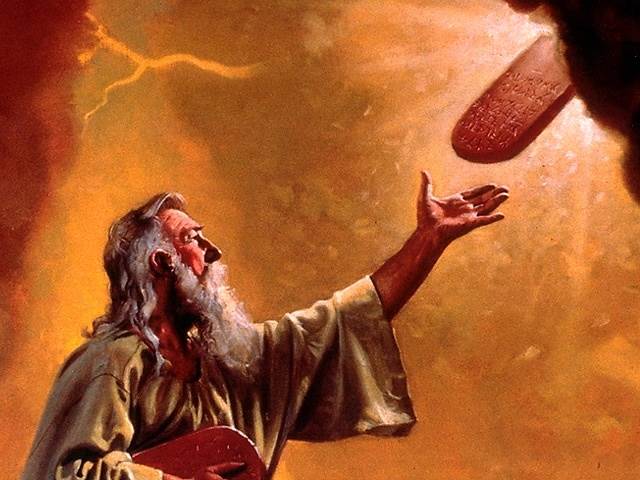
26. Name three men other than Moses who saw God in this week’s reading. How many other unnamed ones also saw Him? What was the point of this vision?
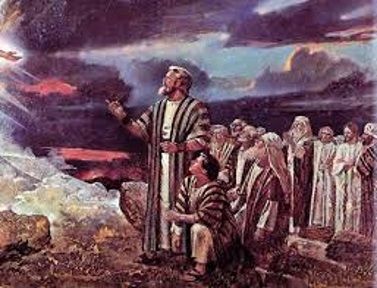
27. It has been said that “apparently it was a far greater challenge to get Egypt out of Israel than to get Israel out of Egypt.” Do you agree? Explain.
28. What is especially notable about the description given of God’s appearance to people in these chapters?
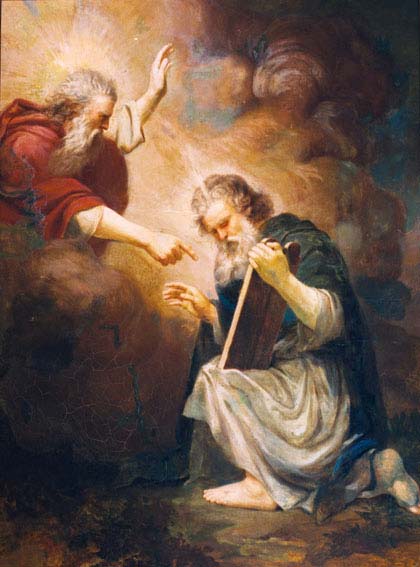
29. Chapters 24, 31-34 are among the most miracle-filled of all scripture. In addition to God’s speaking to Moses frequently and appearing to him and 73 others on Mt. Sinai, how many other miracles can you find in these five chapters where God intervened to bless the Israelites?
30. Why would the Lord have prescribed the death penalty for sabbath violation, when almost no one would be alive if that were enforced today?

31. Why did the Lord not want the Israelites to make any “covenants” or alliances with the inhabitants of the promised land? (34:12)
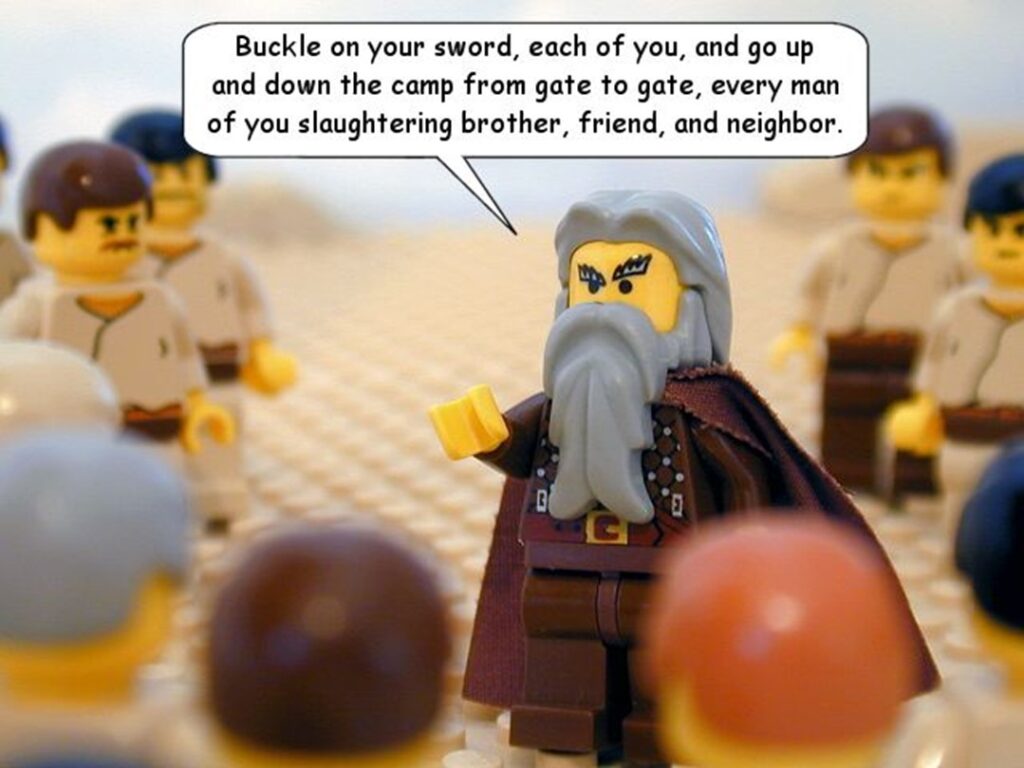
32. When Moses commanded the people in the name of the Lord to “slay every man his brother, and every man his companion, and every man his neighbour” (32:27), why were only 3000 killed, when there were reportedly 600,000 men among them?
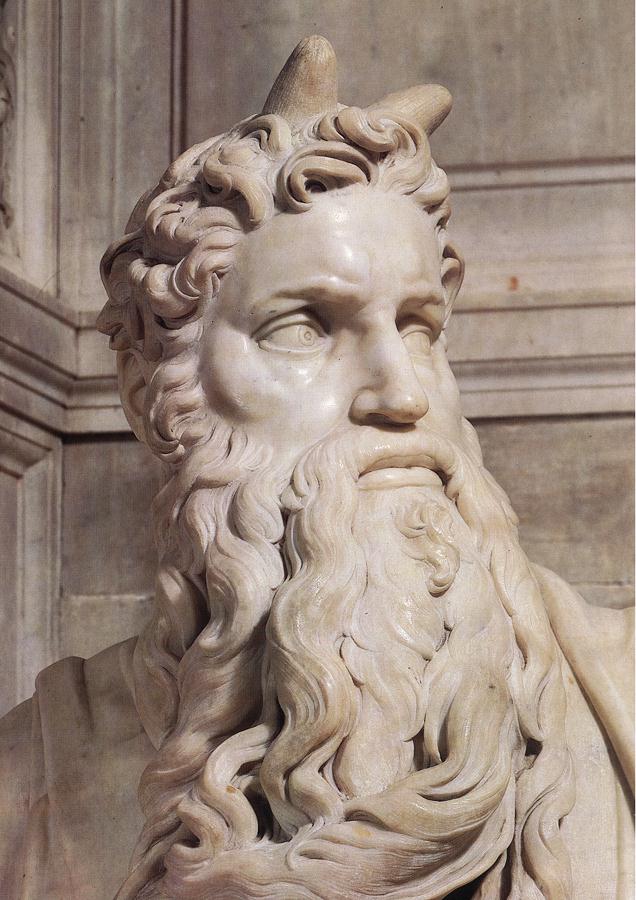
33. Why did Michaelangelo’s statue of Moses (below) show Moses with horns? How do we know he didn’t really have them?
Possible Answers to Points to Ponder in Exodus 19-20, 24, 31-34
1 . How do Latter-day Saints most often misunderstand Exodus 19:5? What would be a better synonym for “peculiar” here than “weird”?
“Peculiar treasure” is most often rendered as “own possession” or “treasured possession” in other English translations. The Lord isn’t telling the Israelites how strange they were or would be viewed by others but how much He loved them and valued them. It is fine to be “peculiar” in the sense of being different from others in good ways, but that is not what this verse is talking about.
2. What six revelations or miracles can you find in chapters 19-20?
- 19:3: God calls unto Moses out of the mountain and gives him instructions.
- 19:9-13: Moses reports back to God and receives additional instructions.
- 19:16: Thunders, lightnings, and a thick cloud, and the voice of a divine trumpet
- 19:18ff: Sinai quakes and shows fire and smoke; voice of a trumpet long and loud; God answers Moses and calls him to ascend the mount and gives him instructions
- 20:1-18: God speaks the Ten Commandments audibly to all the people. (20:22). This is not generally understood, but verse 22 seems to make it clear.
- 20:22-26: God speaks again to Moses and gives him further instructions.
3. What application can we make of 19:10-14 as we prepare to attend the temple?
Sanctify our hearts and prepare our best, clean clothes.
4. What opportunity do we learn in 19:6 that the Israelites missed out on as a nation? Where in modern scripture do we learn more about it?
Had the Israelites been receptive and worthy, the Lord would have made them a “kingdom of priests.” In other words, every worthy man could have held the Melchizedek Priesthood, as is true in the Church today. But, as D&C 84:23ff tells us, “This Moses plainly taught to the children of Israel in the wilderness, and sought diligently to sanctify his people that they might behold the face of God; But they hardened their hearts and could not endure his presence; therefore, the Lord in his wrath, for his anger was kindled against them, swore that they should not enter into his rest while in the wilderness, which rest is the fulness of his glory. Therefore, he took Moses out of their midst, and the Holy Priesthood also; And the lesser priesthood continued.” That lesser priesthood, of course, was restricted to members of the tribe of Levi, and the Lord took away His higher law and gave the people what we call the Law of Moses, a law of carnal commandments, rites, and ordinances though which, it was hoped, they could learn obedience and prepare themselves to live the higher, spiritual law someday. The people’s rejection of their initial opportunity is first seen in Exodus 20:19, when after the marvelous experience of hearing God speak directly to them from Mt. Sinai, they told Moses, “Speak thou with us, and we will hear: but let not God speak with us [any more], lest we die.” They sealed the deal a few chapters later when Moses descended with the written law, only to find the people worshipping a golden calf and behaving riotously, causing Moses to throw down and break the first set of plates. As we will see in the Joseph Smith Translation of Exodus 34:1, when Moses went back for a second set of plates, they were different from the first set and contained the lesser law.
5. What is the most needed modern application of the first and second commandments, which forbade having any gods before our Father in Heaven or making graven images? Is idolatry really an issue in this intellectually advanced age?
Idolatry is indeed a serious challenge today, if it is understood that anything which is put first in our life becomes our “god.” As the Lord said in D&C 1:16, people in general “seek not the Lord to establish his righteousness, but every man walketh in his own way, and after the image of his own god, whose image is in the likeness of the world, and whose substance is that of an idol, which waxeth old and shall perish in Babylon, even Babylon the great, which shall fall.” For some, their god may be wealth. For others, learning, or leisure, or pleasure. If it comes first in our lives, the Lord counts it as idolatry and a violation of His first and second commandments on Sinai.
Spencer W. Kimball taught:
“Idolatry is among the most serious of sins. … Modern idols or false gods can take such forms as clothes, homes, businesses, machines, automobiles, pleasure boats, and numerous other material deflectors from the path to godhood. … Intangible things make just as ready gods. Degrees and letters and titles can become idols. … Many people build and furnish a home and buy the automobile first—and then find they “cannot afford” to pay tithing. Whom do they worship? Certainly not the Lord of heaven and earth. … Many worship the hunt, the fishing trip, the vacation, the weekend picnics and outings. Others have as their idols the games of sport, baseball, football, the bullfight, or golf. … Still another image men worship is that of power and prestige. … These gods of power, wealth, and influence are most demanding and are quite as real as the golden calves of the children of Israel in the wilderness.”

6. Does the commandment against making graven images mean we should not have statues of Jesus in our homes or pictures of Him on our walls or in our chapels?
Not at all. The prohibition was only against making such images to worship them, as though they themselves were our god. But some of the best things we can have in our homes are representations of God and His work to remind us of what is really important.
7. How many different applications can you think of for the third commandment, not to “take the name of the Lord … in vain”?
It could include:
- Not using the name of God or His Son in profane expressions or even flippantly. “Let all men beware how they take my name in their lips,” the Lord commanded in D&C 63:61. He went on to say, “Remember that that which cometh from above is sacred, and must be spoken with care, and by constraint of the Spirit.” And He tells us in D&C 107 that the name of the higher priesthood was changed to be known as the “Melchizedek Priesthood” to avoid the too frequent repetition of the name of God. This could even have application to how often we mention His name or title in the same prayer.
- Swearing to do something, invoking the name of Deity, and then not following through. (E.g., promising “As God lives, I’ll be there,” and then not showing up.)
- Not following through on baptismal and temple covenants, where we promised in the name of God to keep His commandments.
8. Which of the following would be clear violations of the fourth commandment, to keep the Sabbath Day holy?
- Going to a good documentary movie at a theater on Sunday.
- Checking in on the Super Bowl for five minutes to see how it was going.
- Accepting a request from a neighbor to take care of his dog over a weekend.
- Taking a walk in the park with your family.
- Going to the beach with your family after first attending your meetings.
- Buying gas on Sunday at a self-serve station.
- Inviting the neighbors over for a Sunday dinner and incurring extra work as a result.
- Cramming for a school test on Sunday.
- Skipping Sunday meetings altogether to visit a sick friend in the hospital.
- Sleeping all afternoon, since it is a “day of rest.”
- Taking the only job you could find to save up money for a mission but which required work on Sunday.
- Choosing voluntarily to become a dairy farmer, which would require milking the cows every Sunday.
- Going into the military, which would require Sunday work.
- Washing your white shirt or Sunday dress on Sunday morning if you had forgotten to do so earlier.
- Reading this far on this list without recognizing there is something wrong with the list itself.
The only clear answer is the last one, which would suggest the reader doesn’t understand the principle of proper Sabbath Day observance. The law of Moses (of which the Ten Commandments were not a part) was a set of well-defined rules. The higher law which the Savior brought relies on one’s being in tune with the Spirit sufficiently to know what is in keeping with the principle of the Sabbath and what is not. It may not always be the same answer for everyone. However, it is important to recognize that the spirit of the law is not necessarily more lenient than the letter of the law. It may well be stricter more often than not. The real question becomes, “How can I best show my love for the Lord by keeping His day holy and drawing closer to Him”? It is not a question of “What can I get away with without incurring divine displeasure?”
9. How does the commandment to honor one’s father and mother apply to one whose father is abusive and whose mother is an alcoholic?
The commandment does not specify that we must appreciate or agree with all that our parents do. But it does suggest that we would still show love and respect to them and extend gratitude for their giving us life and all else they have done or are doing that is praiseworthy. We are much more likely to help them change by loving and respectful persuasion than by criticism. A case in point is Nephi’s approach to his father when Lehi was murmuring along with the rest of the family after Nephi broke his bow. Rather than see it as an opportunity to stage a “spiritual coup” and take over the leadership of the family, after making a new bow and arrow Nephi went to his father to ask him where he should go to find game. By treating his dad as if he were the spiritual giant he was supposed to be, Nephi helped him resume that role and successfully seek divine revelation as to where Nephi should go hunting.
Honoring parents would also imply living so as to bring honor to them. It does not necessarily mean to obey them, if their instructions would cause us to disobey our Heavenly Father. Such obedience to earthly parents could well be a way to dishonor them. But those would be extreme cases. In general, children show love and honor to their parents by doing what they ask them to, even though the child may not see the reason for it.
10. The fifth commandment implies that if you honor your father and mother, “your days will be long.” How do we explain the early death of some who really loved their parents?
This has no relationship, of course, to mortal longevity but to the promise that the righteous will inherit the sanctified, celestialized earth as their home in eternity.
11. What footnotes may you want to put next to the sixth commandment, “Thou shalt not kill,” to make it as clear as possible what the Lord means here?
What the Lord means here is “Thou shalt not commit murder.” It has no relevance to killing enemies in a war or executing those guilty of capital offenses, unless one finds particular enjoyment in it.
In D&C 59:6, the Lord further stipulated, “Thou shalt not … kill, nor do anything like unto it.” That would clearly prohibit abortion, except in those very rare cases outlined in the General Handbook and in which the Spirit confirms the propriety of the decision. It would also prohibit assault which could lead to the death of another, even if the victim happened to survive.
It even has relevance to our treatment of animals. While the Lord has condoned our limited use of meat for food. The Joseph Smith Translation of Genesis 9:5 says, “And surely blood shall not be shed only for meat to save your lives and the blood of every beast will I require at your hands.” On the same subject, the Lord said in D&C 49:21, “And wo be unto man that sheddeth blood or that wasteth flesh and hath no need.”
12. The seventh commandment specifies, “Thou shalt not commit adultery.” The dictionary defines that as “voluntary sexual intercourse between a married person and a person who is not his or her spouse.” Why is the Church, then, so opposed to premarital sex and homosexual relations between unmarried people?
Exodus 20:14, of course, is not the only place the Lord has spoken on the subject of sexual purity. In Matthew 15:19 Jesus lumps fornicators (unmarried people engaging in sexual relations) into a list of other evil-doers: For out of the heart proceed evil thoughts, murders, adulteries, fornications, thefts, false witness, blasphemies.” Peter wrote that new converts were to “abstain from … fornication.” (Acts 15:20.) Paul was just as clear that “this is the will of God … that ye should abstain from fornication.” The law of Moses specified that homosexual behavior was “abomination.” (Leviticus 18:22.) And Paul was equally specific that neither fornicators, adulterers, nor “abusers of themselves with mankind” would inherit the kingdom of God. (1 Cor. 6:9-10.) That did not mean, of course, that such had committed an unpardonable sin. Paul went on to say that some of those to whom he was writing had been among those whose past behavior was unacceptable. “But,” he continued, “ye are washed, but ye are sanctified, but ye are justified in the name of the Lord Jesus, and by the Spirit of our God.” (1 Cor. 6:11.) But such sanctification came only after repentance. Paul was in no way minimizing the seriousness of the prior transgressions.
In our day, living prophets through the Family Proclamation have similarly emphasized, “The sacred powers of procreation are to be employed only between man and woman, lawfully wedded as husband and wife.” These prohibitions, properly understood, are not God’s attempt to interfere with our “fun” but His recipe as to how we can have eternal joy in a proper marriage relationship, not simply pleasure for a moment.
13. What applications of the commandment “thou shalt not steal” could you suggest beyond the most obvious ones?
In addition to stealing property, we could violate this commandment by:
- Stealing another’s school work by copying it or plagiarizing another’s writings.
- Stealing another’s time by keeping him waiting for a scheduled appointment.
- Stealing another’s opportunity to feel the Spirit by our irreverence in meetings or in the temple.
- Stealing another’s accomplishments at work by taking credit for them ourselves.
- Stealing another’s virtue through improper enticements on our part.
- Stealing another’s health by not getting vaccinated or wearing your mask.
- Stealing from society by being dishonest on our tax returns.
- Stealing from our employer by not doing an honest day’s work for a day’s pay.
- Etc.
14. The ninth commandment says only that we shouldn’t bear false witness against someone else. It doesn’t say anything against lying otherwise, does it?
That is correct. But again, the Lord didn’t say everything on the subject in the Ten Commandments. Proverbs 12:22 assures us that “lying lips are abomination to the Lord.” Paul urged the Ephesians, “Putting away lying, speak every man truth with his neighbour.” (Eph. 4:25.) John promised that “all liars” would have their part in the lake which burneth with fire and brimstone: which is the second death.” (Revelation 21:8.) And Joseph Smith taught that it was “contrary to the order of heaven for a just man to deceive.” (D&C 129:7.)
There does seem to be an exception to the rule. It is clear that lying or deceiving for one’s own personal gain is wrong. But the Book of Mormon speaks with approval of the former Lamanite who took wine from the Nephites to the Lamanite army guarding the city of Gid, told them that he had escaped from the Nephites, and got the guards so drunk that Moroni and his men were able to throw weapons over the wall into the city, enabling the Nephites to easily capture the city the next morning. And Gideon’s triumph over the Middianites was due in part to his deceiving the Middianite army by blowing trumpets, breaking pitchers, and making such a noise that the Middianites thought they were facing a much larger army. Joseph Smith’s family once scared away a mob through similar tactics.
15. How guilty should we feel about having broken the tenth commandment, “thou shalt not covet,” if we wish I had a house or car as nice as our neighbor’s?
Probably not guilty at all, if it inspires us to work hard, set goals, and work toward getting something just as nice, provided our reasons for wanting them are legitimate. Legitimate reasons could be to have more reliable transportation to better do the Lord’s work and to serve our family, or a bigger and nicer home where we could have youth firesides and be more efficient in our lives. But we would be in violation of the spirit of the commandment if we wanted such things just to satisfy our pride or “vain ambition.” And we would definitely break the commandment if we plotted how we could steal the neighbor’s car or take his home through some foreclosure process or by cheating him on the purchase of it.
16. Which two or three of the Ten Commandments do you feel are most in need of additional emphasis among Latter-day Saints? Why?
Your choice. I would probably pick:
- The 1st: Because too many put other things before God in their lives.
- The 4th: Most LDS have yet to learn to purpose of the spiritual feast the Lord designed for our benefit on the Sabbath, which if partaken of would protect them against violating most of the other commandments.
- The 7th: The great plague of this generation.
17. How do the first four of the Ten Commandments differ from the last six?
The first four outline our responsibilities directly to God. The last six deal with our relationships with His other children, our fellow men.
18. Why didn’t the Israelites want God to speak to them any more after they heard Him speak the Ten Commandments in the hearing of them all?
Probably because they felt more guilt than joy in His presence and were more offended than uplifted by God’s commandments. As Alma said, at the judgment day, “our words will condemn us, yea, all our works will condemn us; we shall not be found spotless; and our thoughts will also condemn us; and in this awful state we shall not dare to look up to our God; and we would fain be glad if we could command the rocks and the mountains to fall upon us to chide us from his presence.” (Alma 12:14.)
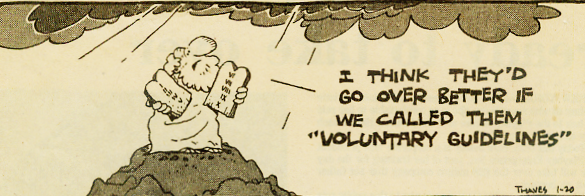
19. Are we really bound by the Ten Commandments today? Weren’t they part of the lesser law, or law of Moses, which Jesus replaced when He came?
The Ten Commandments were given as part of the higher law, before the Israelites rejected God and proved unworthy of the higher blessings, including universal priesthood and temple blessings, which He offered them. Jesus did NOT do away with them. They are as binding as ever.
20. What do we read in Exodus 24 that makes clear why God was so angry at the people when they were worshipping a golden calf so soon thereafter?
They had twice promised (24:3, 7) that “all the words which the Lord hath said will we do.” Just as transgression is more serious for a baptized member than for a non-member, and more serious yet for one who has made temple covenants, so was it more serious for Israel to transgress after solemnly promising God they would not.
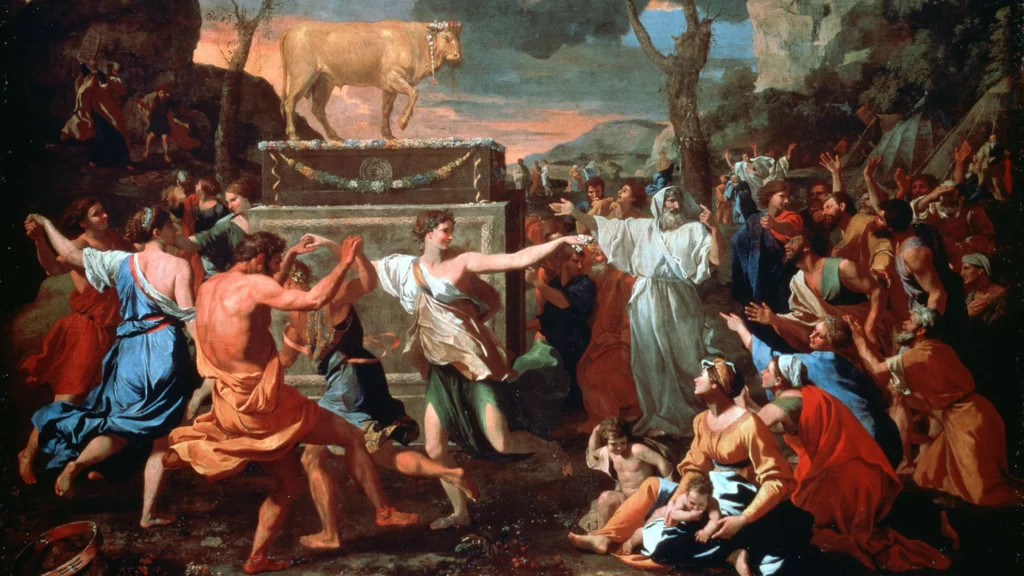
21. How could the entire nation of Israel forget their covenants so quickly? What lesson is there for us in this?
We don’t have the details of why Israel so soon forgot, but it is likely they didn’t really try to keep the covenants they had so recently made and teach each other the importance of doing so. They likely became lax in their prayers and in their attention to the details of the Ten Commandments and other instructions they had so recently heard God Himself speak from Sinai. Just as we can become physically weak in a matter of days, if we don’t eat physical food, so can we become spiritually weak just as quickly, but be less likely to notice it, if we don’t constantly nourish our spiritual selves.
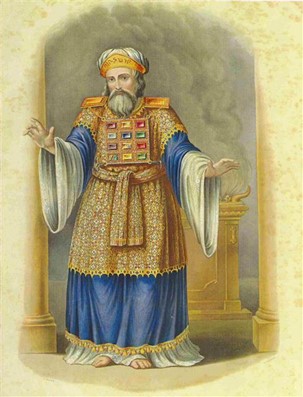
22. Why would the lesser priesthood be named after someone who made a golden calf for Israel’s idolatrous worship?
Aaron is so honored not because of the golden calf episode but in spite of it. Though the Lord was very angry with Aaron (Deut. 9:20), Aaron obviously repented and was allowed to continue in his priestly office. Other than for this one major slip, Aaron was a great example of a worthy priesthood holder. It is worth noting, as the Institute student manual points out, that Aaron may not have been attempting to substitute the worship of the golden calf for the worship of God but could have hoped to use the golden calf as a symbol of the true God and point the people toward appropriate worship through that visual aid. The fact that God was extremely angry about it shows that it was a poor decision on Aaron’s part, but not necessarily a mark of rebellion. We also see here God’s mercy in rewarding Aaron for what he became and not perpetually punish him for what he once did in a weak moment.
23. What vital additions did Joseph Smith make to the Exodus record pertaining to the second set of tablets the Lord prepared for Moses? How did the second set differ from the first set?
The second set did not contain the ordinances of the Melchizedek Priesthood, including temple ordinances, as did the first, and it clarified that the Lord’s personal presence would not attend them as would otherwise have been their privilege. And the second set had a law of carnal commandments, rites, and ordinances added to help the Israelites progress from where they were to where they needed to be.
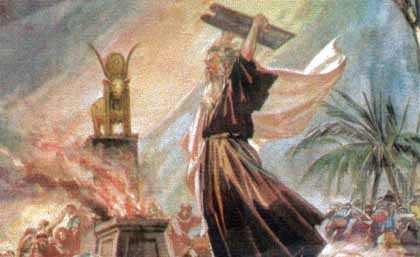
24. What other essential contributions does the Joseph Smith Translation make to our understanding of these chapters?
- God did not “repent,” as Exodus 32:14 would have us believe, but offered to spare the people if they would repent, as Moses promised they would.
- It is not true that no man can see God and live, as the uncorrected version of Exodus 33:20 indicates, but it is true that no “sinful” man can see God and live.
25. What principles, applicable in our lives today, can we learn from God’s substitution of the “lesser law” on the second set of plates for the higher law which was contained on the first set?
They could include:
- The “lesser law” was not intended as a punishment, but as a blessing to the Israelites, to help them eventually get to the point they could enjoy more. Likewise, we can delegate responsibilities in the ward or in our homes commensurate with where others are now, not with where we wished they already were.
- Giving someone too much responsibility too early, before he is prepared for it, could prove a curse and cause him to give up and become less active. It is important to provide others with success experiences, not with repeated failure.
- Young men or new converts who hold the Aaronic Priesthood should be given significant responsibilities and opportunity to use that priesthood to prepare them for later receiving the Melchizedek Priesthood.
26. Name three men other than Moses who saw God in this week’s reading. How many other unnamed ones also saw Him? What was the point of this vision?
Aaron, Nadab, and Abihu (24:9-11), in addition to 70 other unnamed “elders of Israel,” saw Him. God would have loved to have shown Himself to the entire congregation, had they been prepared. As D&C 84:23 tells us, Moses “sought diligently to sanctify his people that they might behold the face of God.” But despite Moses’ efforts, these 74 seem to have been the only ones who were prepared for this great experience, and to “enter into [the Lord’s] rest while in the wilderness.” For others it would have been a curse, not a blessing. There are repeated promises in the Doctrine and Covenants that we can progress to the point that we can each see the face of God. That may or may not occur in this life, but if we aren’t preparing ourselves for that experience, we are likely to find that being in His presence on judgment day will be an uncomfortable experience.
27. It has been said that “apparently it was a far greater challenge to get Egypt out of Israel than to get Israel out of Egypt.” Do you agree? Explain.
Though the Lord had to intervene with many miracles both before and after the Exodus, He succeeded in getting 600,000 men plus their wives and children out of Egypt into the desert. But getting “Egypt out of Israel,” or getting Israel to abandon the corrupt religious practices and forget the comparative comforts and temptations of Egyptian culture required the willing participation of each Israelite, as God will never force the human mind. As we see in this week’s reading, only 74 men were willing to make the necessary sacrifices to fully divest themselves of the negative influence of Egypt.
28. What is especially notable about the description given of God’s appearance to people in these chapters?
More than in most other places in the Bible, these visions mention a variety of God’s body parts, including his face, hand, finger, back parts, and feet. Clearly, the true God is not a god “without body, parts, or passions,” as the apostate Christian world has taught.
29. Chapters 24, 31-34 are among the most miracle-filled of all scripture. In addition to God’s speaking to Moses frequently and appearing to him and 73 others on Mt. Sinai, how many other miracles can you find in these five chapters where God intervened to bless the Israelites?
- Moses survives 40 days and nights on top of Mt. Sinai, where there was no access to food or water. (24:18)
- God filled Bezaleel with wisdom, understanding, and knowledge to enable him to oversee the building of the tabernacle. (31:3)
- The Lord filled the hearts of others with wisdom to assist. (31:6)
- The Lord physically made two tables of stone, engraven with His own finger. (31:18)
- The Lord “plagued the people because they made the calf.” (32:35)
- A cloudy pillar, visible to all, descended upon the temporary “tabernacle” Moses set up outside the camp as a place for him to meet regularly with the Lord. (33:9)
- Moses survived a second 40 day and night episode on Mt. Sinai with no food or water. (34:28)
- Moses’ face shone when he came down from Sinai (34:29)
30. Why would the Lord have prescribed the death penalty for sabbath violation, when almost no one would be alive if that were enforced today?
The Lord was obviously trying to save their spiritual lives by threatening to take away their physical lives if they violated the sabbath and thereby starved themselves of the spiritual sustenance they would so much need. It would be far better to die physically than to die spiritually.
31. Why did the Lord not want the Israelites to make any “covenants” or alliances with the inhabitants of the promised land? (34:12)
The wickedness of those living there was so pervasive that it would be a “snare” to the Israelites, especially if they intermarried with them. The Lord’s instructions were to be that all those Amorites, Canaanites, Hittites, etc., were to be killed and their altars, images, and sacred groves destroyed.
32. When Moses commanded the people in the name of the Lord to “slay every man his brother, and every man his companion, and every man his neighbour” (32:27), why were only 3000 killed, when there were reportedly 600,000 men among them?
Presumably these 3000 were the only ones who would not repent and avail themselves of the Lord’s offer to spare those who did. We can be sure that Moses did not give an order for everyone to start killing their neighbors indiscriminately, but for legal authorities to kill those who were so recalcitrant they were unwilling to repent and who would therefore pose a mortal danger to the Israelites’ spiritual wellbeing.
33. Why did Michaelangelo’s statue of Moses show Moses with horns? How do we know he didn’t really have them?
Michaelangelo was relying on the Latin Vulgate version of the Bible, which erroneously translated the Hebrew word meaning “shone” as “horned.” Moses’ appearance was similar to that of Abinadi (Mosiah 13:5) and to that of Joseph Smith after seeing the vision recorded in D&C 76.
Some Related Cartoons for Your Enjoyment


 |
| Commandment #1 |
 |
| Commandment #2 |
 |
| Commandment #3 |
 |
| Commandment #4 |
 |
| Commandment #5 |
 |
| Commandment #6 |
 |
| Commandment #7 |
 |
| Commandment #8 |
 |
| Commandment #9 |
 |
| Commandment #10 |

 |
| From Exodus 24 |


 |
| See Exodus 34 |


Comments
Post a Comment