Points to Ponder in Ruth and 1 Samuel 1-7

To accompany your Come, Follow Me study for June 1-7
In addition to reading these chapters from the Old Testament, you may enjoy:
- Reading the corresponding Old Testament Study Helps at Ruth; 1 Samuel 1–7.
- Scripture Central Ruth 1; Samuel 1-7 - Scripture Central
- FAIR My Heart Rejoiceth in the Lord
- Interpreter Foundation Ruth; 1 Samuel 1–7
- Watching any or all of the following videos:
If you would like a Kahoot game related to this material, click here: https://create.kahoot.it/share/ruth-and-1-samuel-1-3/2709bac6-5476-4376-af2c-7122b8fdd74d.
Points to Ponder in Ruth and 1 Samuel 1-7
1. What is there in the book of Ruth that has made it such a favorite among Bible stories throughout the centuries?
2. Why is there no objection to Israelite-Moabite marriages mentioned in this account?
3. What principles and motives seem to have influenced Ruth to decline Naomi’s reasonable suggestion to return to her family and to choose instead to go with Naomi, her mother-in-law?
4. By our standards, Ruth’s actions in spending the night lying next to Boaz in the threshing room and then proposing marriage to him seem a bit forward, to say the least. How can you defend Ruth’s actions?
5. What evidence do you see of the hand of the Lord in the story of Ruth?
6. What do you think would be the major lesson the author of 1 Samuel 1 would hope we would get from that chapter?
7. What do you think would be the major lesson the author of 1 Samuel 2 would hope we would get from that chapter?
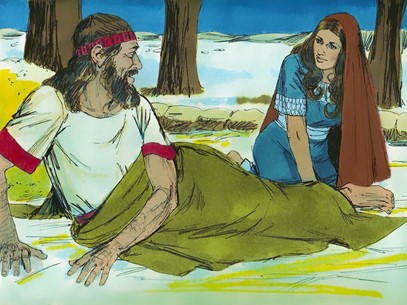
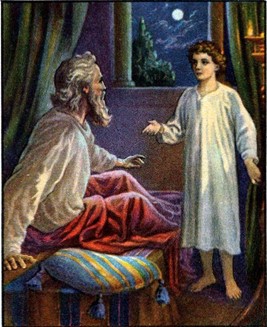
8. What do you think would be the major lesson the author of 1 Samuel 3 would hope we would get from that chapter?
9. How could the Lord be so hard on Eli for not restraining his sons (1 Samuel 3:13), when he was 98 years old, practically blind, and physically could have been no match for either of his younger sons, let alone both of them? Hadn’t Eli actually tried to correct his sons in 1 Samuel 2:23-24?
Possible Answers to Points to Ponder in Ruth and 1 Samuel 1-7
1. What is there in the book of Ruth that has made it such a favorite among Bible stories throughout the centuries?
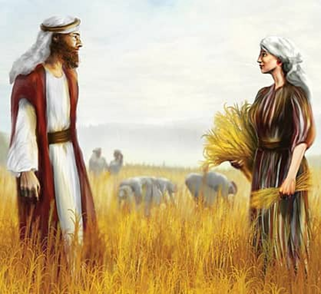
After the depravity of so much of the book of Judges, it is a refreshing story with no villains. It shows the great love of Ruth for Naomi and the kindness and nobility of Boaz. It is masterfully crafted as literature. It shows that the ancestry of David and hence of Christ includes a Gentile convert.
2. Why is there no objection to Israelite-Moabite marriages mentioned in this account?
Ruth was willing to adopt Naomi’s religion and did not attempt to lead Naomi or her son away from it.
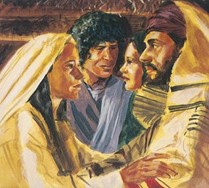
3. What principles and motives seem to have influenced Ruth to decline Naomi’s reasonable suggestion to return to her family and to choose instead to go with Naomi, her mother-in-law?
Presumably, Ruth had a spiritual witness that Naomi’s religion was true. Otherwise, it would have been gullibility rather than loyalty for which we might properly remember Ruth.
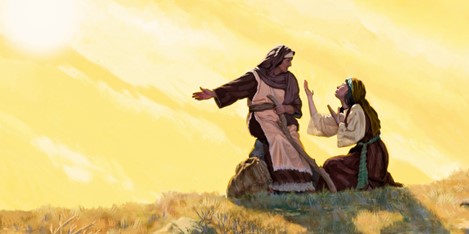
4. By our standards, Ruth’s actions in spending the night lying next to Boaz in the threshing room and then proposing marriage to him seem a bit forward, to say the least. How can you defend Ruth’s actions?
This was not so bizarre in her culture as it would seem in ours. This was an acceptable way for her to propose marriage to Boaz, as she had every right to do as a widow of one of Boaz’s relatives.
5. What evidence do you see of the hand of the Lord in the story of Ruth?
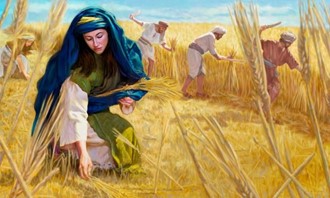
The fact that she just “happened” to end up gleaning in Boaz’s field rather than someone else’s and that Boaz was the one who could and should marry her, seems more than coincidence.
6. What do you think would be the major lesson the author of 1 Samuel 1 would hope we would get from that chapter?
Your choice. Possibilities include
- The value of children
- The reality of miracles
- The need for sacrifice

7. What do you think would be the major lesson the author of 1 Samuel 2 would hope we would get from that chapter?
Perhaps the dangers of weak parental leadership
8. What do you think would be the major lesson the author of 1 Samuel 3 would hope we would get from that chapter?
Possibilities include:
- Revelation comes only to the righteous.
- The need to learn to recognize the voice of the Lord.
- The hazards of weak parental leadership.
9. How could the Lord be so hard on Eli for not restraining his sons (1 Samuel 3:13), when he was 98 years old, practically blind, and physically could have been no match for either of his younger sons, let alone both of them? Hadn’t Eli actually tried to correct his sons in 1 Samuel 2:23-24?
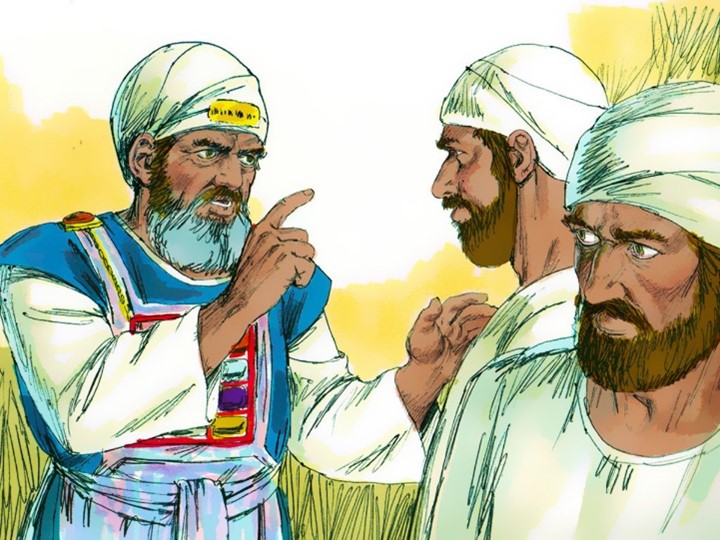
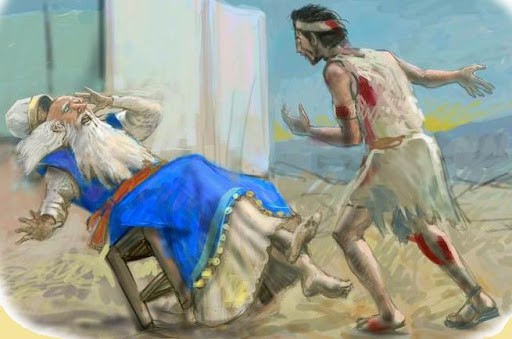
Eli’s half-hearted “Why do ye do such things?” could hardly be considered a serious attempt to restrain his sons from forcibly taking sacrificed meat for themselves (1 Samuel 2:16) or seducing women at the very entrance to the tabernacle (2:22). Admittedly, Eli likely could not have physically restrained his sons single-handedly, but he could have sought help from others if he had been so inclined.
Related Images for Your Enjoyment
 |
| Ruth 1 |
 |
| Ruth 1 |


 |
| Ruth 4:9-10 |


 |
| 1 Samuel 3:4-10 |


Comments
Post a Comment